


UNDERSTANDING YOUR 8Cs PROFILE
Your scores tell a story.
Learn to read them together.
Your Real Presence 8Cs Profile offers a snapshot of how the qualities of Presence are available to you - and how protective patterns may become more active when pressure enters the picture.
It does not define who you are. It gives you another way to notice how you are showing up - and where greater Presence may become possible.
A more present you. A brighter tomorrow.
Two Measures. One Human Experience.
Presence and Fragmentation are distinct - not opposites.

Presence
What is available to me?
Your Presence score reflects how accessible and expressed the qualities of Presence appear to be in your life. Higher scores suggest these qualities are more readily available to you.
Fragmentation
What happens when protection becomes active?
Your Fragmentation score reflects how active protective patterns, reactive habits or internal barriers may be. Higher scores suggest these patterns may arise more frequently or strongly.

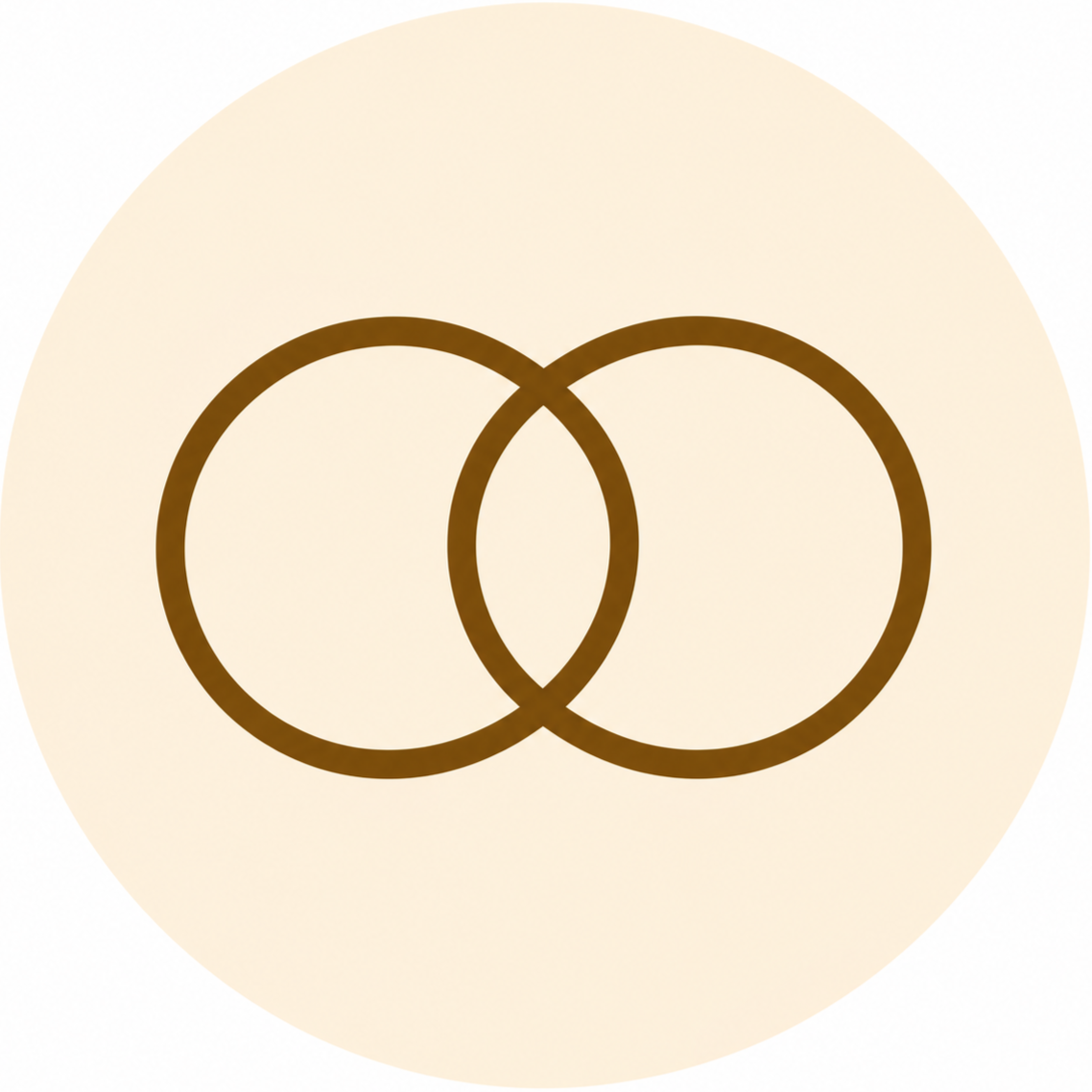
One score is not calculated by subtracting the other.
You can have strong access to Presence and still experience significant protective activation.
Both can be true at the same time.
Understanding Your Presence %
Select the range that matches your score to explore what it may be reflecting.
Emerging Presence (70–84%)
Presence is readily available to you in many situations. You may already experience yourself as thoughtful, grounded, connected and able to respond with intention. Under particular pressures, however, some qualities may become less accessible. Becoming curious about these moments can help you deepen your capacity to remain present even when circumstances become challenging. Deepen: What tends to pull me away from Presence when the pressure rises?
Understanding Your Fragmentation %
Select the range that matches your score to explore what it may be reflecting.
Moderate Fragmentation (41–60%)
Protective patterns influence how you think, feel or respond with noticeable frequency. Certain situations, relationships or pressures may activate familiar reactions such as self-criticism, defensiveness, avoidance or a need for control. These patterns are not failures; they often developed for a reason. Increasing awareness can help you recognise them earlier and create more room for choice. Become curious: Which situations most reliably activate my protective patterns?
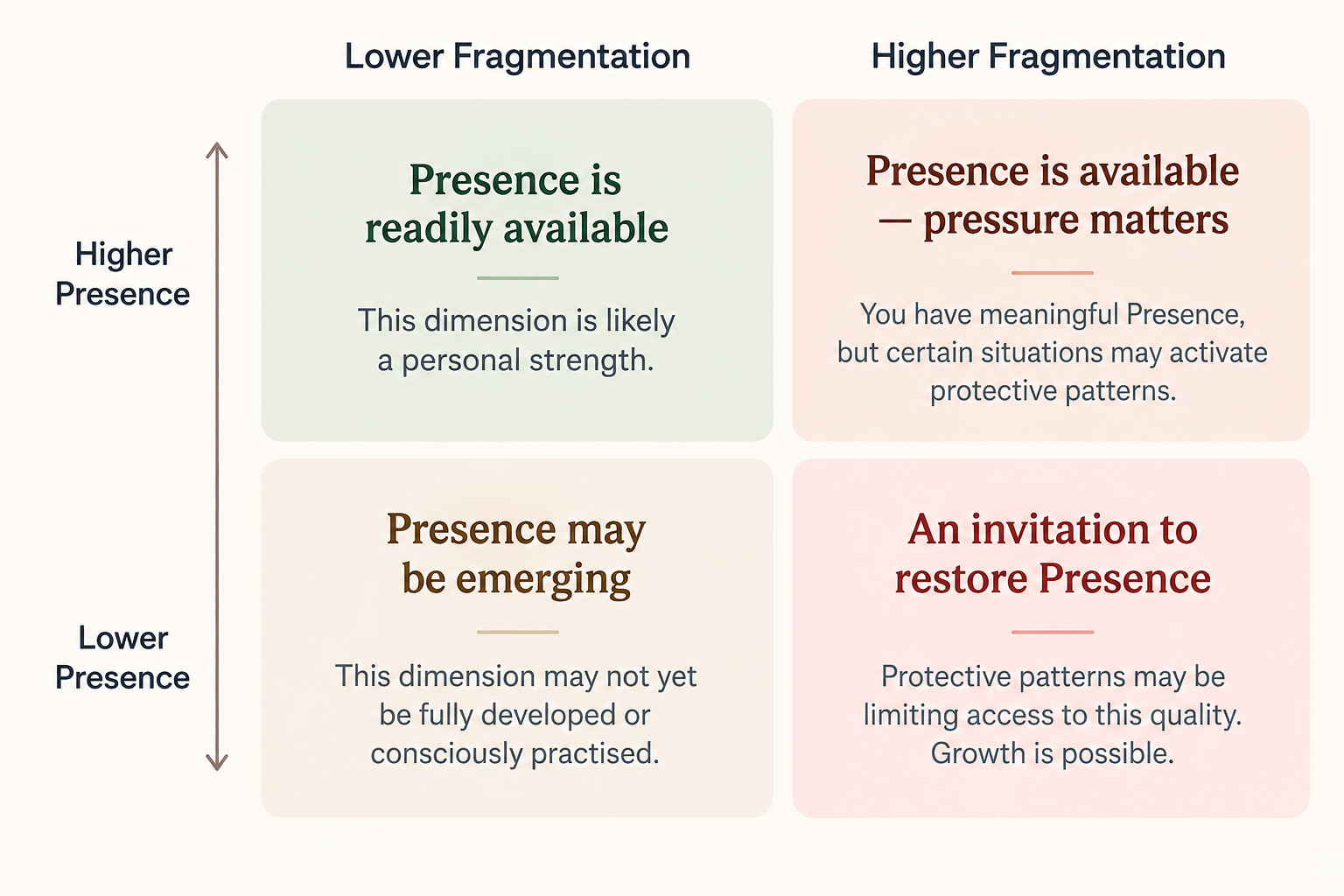
Now, read them together.
Neither score tells your whole story.
Your combination of Presence and Fragmentation offers a more complete picture. Explore what your two scores may mean together.
Eight expressions of Presence.
Select a dimension to explore what it means, how it may show up in your life, and what can happen when it becomes harder to access.
Compassion
Meeting myself and others with humanity, care and understanding.
Compassion helps me respond with understanding — to myself and to others. It softens self-judgment, opens space for empathy, and helps connection remain possible even when something is difficult.
When available
I can meet difficulty with kindness, dignity and understanding rather than criticism.
When harder to access
I may become self-critical, judgmental, blaming or emotionally distant.
Can I stay human with myself and this person, even here?
WHOLE YOU
Read the pattern, not just the percentage.
Your profile is unique. Here are some common patterns you may recognise and explore.
Strong Compassion,
lower Courage
“I care deeply, but difficult truth can be hard to voice.”
Strong Confidence,
higher Fragmentation
“I trust my abilities, but pressure can still activate protective responses.”
Strong Connectedness,
lower Calmness
“Relationships matter deeply to me, but I may lose my grounding when connection feels threatened.”
Strong Clarity,
lower Curiosity
“I can see what matters, but I may become too certain about what I think I know.”
Strong Courage,
lower Compassion
“I can face what is difficult, but I may move too quickly past how it affects people.”
Strong Creativity,
lower Clarity
“I can see many possibilities, but deciding what matters most can become difficult.”
Strong Curiosity,
lower Confidence
“I explore deeply, but I may keep questioning myself when it is time to act.”
Strong Calmness,
lower Courage
“I can remain composed, but sometimes peace becomes a reason not to disturb what needs addressing.”
Higher Presence,
higher Fragmentation
“I have strong capacities, but pressure can still pull me into protection.”
Context matters.
You may experience yourself differently depending on the situation.
Presence is not a fixed personality trait. A quality that feels readily available in one context may become more difficult to access in another. Your profile is a developmental snapshot, not a permanent label.

Pause with your profile.
You don’t need to fix anything. Start by noticing.
What in my profile feels most recognisable?
What surprises me or makes me curious?
Where might greater Presence make the most meaningful difference in my life right now?


Awareness is where the movement towards wholeness begins.